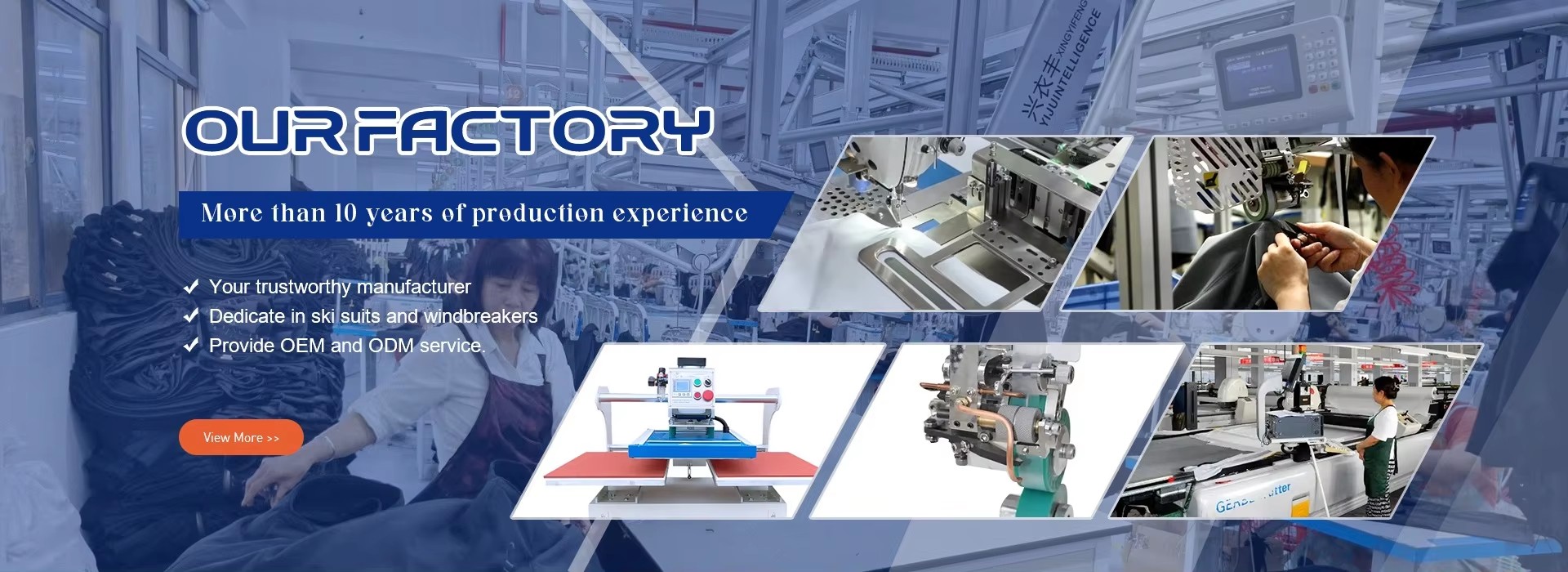
Selecting the right waterproof jacket supplier is one of the most critical decisions for outdoor brands, retailers, and private label businesses. A poor choice can lead to defective products, costly returns, damaged reputations, and lost customers. Yet many buyers still rush into partnerships based on a single factor — price — and overlook the fundamentals that determine long-term success.
In this guide, we break down the top 10 things you must verify before committing to a waterproof jacket manufacturer, so you can build a reliable supply chain and deliver products your customers trust.
1. Waterproof Performance & Testing Certifications
The single most important feature of a waterproof jacket is — unsurprisingly — its waterproof performance. Don't take a supplier's word for it. Ask for third-party lab test reports that verify waterproof ratings (typically measured in mm/H₂O).
A quality waterproof jacket should withstand at least 5,000mm for light rain, and 10,000mm+ for serious outdoor use. Reputable suppliers will provide test reports from recognized laboratories, along with details on the testing standard (e.g., ISO 811 or AATCC 127).
Red flag: A supplier that cannot produce written test data or only provides self-made "test results."
2. Fabric Quality & Breathability Technology
A jacket that keeps rain out but traps sweat inside is not a functional product — it's a plastic bag. Breathability is just as important as waterproofing, especially for active outdoor use.
Check whether the supplier offers:
- Membrane technologies (e.g., ePTFE or PU-based membranes)
- Breathability ratings (measured in g/m²/24h — aim for 5,000g+ for mid-range, 10,000g+ for high-performance)
- Fabric options suited to your target market (2-layer, 2.5-layer, or 3-layer construction)
A professional waterproof jacket manufacturer will walk you through fabric options and recommend the right combination for your specific use case, rather than pushing a one-size-fits-all solution.
3. Seam Sealing Capability
Even the most waterproof fabric will leak if the seams aren't properly sealed. Seam sealing is the process of applying waterproof tape or liquid sealant to every stitched seam, preventing water from seeping through needle holes.
Before choosing a supplier, verify:
- Do they have dedicated seam sealing equipment (hot air taping machines)?
- Can they handle both tape sealing and liquid seam sealing?
- What percentage of their production line is equipped for seam sealing?
- Do they perform 100% seam inspection before shipping?
Many buyers underestimate this step. A supplier without proper seam sealing capability will produce jackets that look great on the surface but fail in real-world rain conditions.
4. Sample Verification & Prototyping
Never place a bulk order without first approving a physical sample. Samples reveal details that photos and spec sheets simply cannot — stitching quality, fabric hand feel, zipper smoothness, fit accuracy, and overall workmanship.
A reliable waterproof jacket supplier should offer:
- Custom sample development based on your design or tech pack
- Reasonable sample lead times (typically 7–15 days for standard styles)
- Multiple revision rounds until the sample meets your standards
- Sample-to-bulk consistency guarantee — the bulk production must match the approved sample
If a supplier rushes you to place a bulk order or discourages detailed sample evaluation, treat it as a major warning sign.
5. Factory Experience & Specialization
How long has the factory been making waterproof jackets? Do they specialize in outdoor apparel, or are they a general clothing factory that dabbles in everything?
Experience matters because waterproof jacket production involves specialized processes — lamination, seam sealing, DWR application, and performance testing — that general garment factories often lack the expertise or equipment for.
Look for:
- 5+ years of focused experience in outdoor/waterproof apparel
- A portfolio of past clients and product examples
- Specialized production lines for technical outerwear
- Knowledge of industry standards and regulations in your target market
6. Production Capacity & Scalability
Your supplier should be able to handle both your current order volume and future growth. Ask about:
- Monthly production capacity (units per month)
- Minimum Order Quantity (MOQ) — does it fit your business size?
- Lead times for both sample and bulk orders
- Ability to scale up for peak seasons or large orders
A supplier that's too small may struggle with quality control during busy periods, while one that's too large might give your orders low priority. Find the right match for your business stage.
7. Quality Control Systems
Quality control (QC) isn't just a final inspection — it should be embedded throughout the entire production process. Ask potential suppliers about their QC framework:
- Incoming material inspection — Are fabrics and components tested before production?
- In-line inspection — Are quality checks performed at each production stage?
- Final inspection — Is there a 100% check or AQL sampling before shipping?
- Waterproof testing — Do they test finished garments, not just fabric swatches?
- Defect rate tracking — Can they provide historical quality data?
Suppliers with robust QC systems will happily share their processes and data. Those who avoid the question may be cutting corners.
8. Certifications & Compliance
Depending on your target market, you may need specific certifications to sell waterproof jackets legally and build trust with customers. Common certifications include:
- OEKO-TEX® Standard 100 — ensures fabrics are free from harmful substances
- GRS (Global Recycled Standard) — for products using recycled materials
- Sedex / SMETA — ethical trade and labor practice audits
- ISO 9001 — quality management systems
- REACH / CPSIA — chemical compliance for EU / US markets
A reputable waterproof jacket supplier will hold relevant certifications and be transparent about their compliance status. Always verify certificate authenticity — don't just accept a logo on a website.
Whether you're building a brand from scratch or expanding an existing line, customization is key to standing out in a crowded market. Evaluate the supplier's ability to accommodate:
- Custom design (OEM) — producing from your own tech packs, patterns, and designs
- Original design (ODM) — selecting from the supplier's existing designs with your branding
- Custom branding — logos, labeling, hang tags, and packaging
- Color and fabric customization — choosing from a range of colors, prints, and material options
- Functional customization — pocket configurations, hood designs, vent systems, etc.
A supplier with strong OEM/ODM capabilities can become a long-term strategic partner, not just a transactional vendor.
10. Communication, Responsiveness & Long-Term Partnership
Last but certainly not least, evaluate how well you communicate with the supplier. A great product at a great price isn't worth it if you can't get answers to your questions or resolve issues quickly.
Pay attention to:
- Response time — Do they reply within 24–48 hours?
- Language capability — Can you communicate clearly without misunderstandings?
- Proactive communication — Do they flag issues early, or only when you ask?
- Problem-solving attitude — How do they handle mistakes or complaints?
- Account management — Is there a dedicated contact person for your account?
A supplier that invests in the relationship will be far more valuable over time than one that offers the lowest price but disappears when problems arise.
Common Mistakes to Avoid
Before we wrap up, let's recap the most common mistakes buyers make when choosing a waterproof jacket supplier — and why they're so costly:
❌ Only checking price — The cheapest quote often leads to the most expensive problems: defects, returns, and reputational damage.
❌ Ignoring fabric testing — Without verified test data, you're gambling with your product's core functionality.
❌ No sample verification — Skipping or rushing sample approval is the #1 cause of bulk order disappointment.
❌ No seam sealing capability — A jacket without properly sealed seams isn't truly waterproof, no matter what the fabric rating says.
Choose a Partner You Can Trust
Selecting the right waterproof jacket supplier is about more than finding someone who can produce jackets — it's about finding a partner who understands your market, stands behind their quality, and grows with your business.
A professional supplier like Auming Outdoor provides waterproof testing reports, breathable fabric solutions, and customized production services. With over a decade of experience in technical outdoor apparel, a full range of certifications (OEKO-TEX®, GRS, Sedex), and end-to-end quality control, Auming Outdoor helps brands deliver waterproof jackets that perform — in the lab, on the trail, and in the hands of your customers.
Ready to discuss your next waterproof jacket project? Reach out to Auming Outdoor for a consultation and sample quote.
Looking for a reliable waterproof jacket manufacturer? Contact Auming Outdoor today to request samples, review test reports, and explore custom production options.


